Chicago Ideas Week kicked off on Monday with Labs, Talks, MegaTalks and Partner Programs. I attended one of the talks that was held at the Chicago History Museum by some of Chicago’s innovators and explorers in Architecture.
Blair Kamin, Architecture Critic for the Chicago Tribune and author of Why Architecture Matters: Lessons from Chicago, hosted the evening’s speakers. Each speaker addressed the audience for about 15 minutes on projects with which they are currently involved.
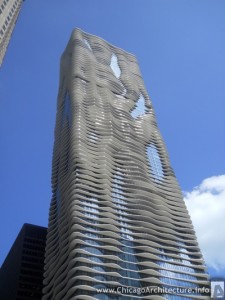 First up was Jeanne Gang, President and Founder of Studio Gang Architects. Ms. Gang is the award-winning architect of the Aqua Tower in Downtown Chicago. The project on which she chose to speak is reclaiming abandoned and often polluted industrial sites in the Chicago suburbs – in this case, Cicero, which has become a destination location for immigrants from Mexico. Her vision begins with a four-year plan of re-planting the sites with poplars and willows, which would draw industrial toxins from the soil. After that, the plan is to utilize existing uninhabited structures (such as assembly plants and factories) as the basis for residential communities. Her ultimate goal is a multi-functional neighborhood, with green areas, public places and commercial space interspersed with residential habitats for a variety of living quarters – homes for both nuclear and extended families, as well as apartments. By offering housing to fit a variety of needs, she hopes the resulting community will remain vital through cultural and economic shifts.
Scott Frances, a world renowned Architecture photographer and frequent contributor to Architectural Digest Magazine, spoke about new directions in Architecture Photography.
One of the most interesting developments is in the use of ambient light. Previously, interiors and exteriors would have to be lit separately in order to capture both dimensions in a single shot. Now photographers can make use of the ambient light in a single setup, shooting the interior and exteriors of architectural spaces separately, then using digital technology to combine both effects into a single photograph. The result is a much more natural-looking photo. Frances has photographed the homes of such celebrities as Jennifer Aniston, Robert Duvall, Diane Keaton, Steve Jobs, Elton John, Ted Turner, and Jessica Lange.
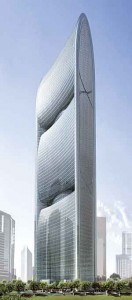
Gordon Gill, Founding Partner of Adrian Smith + Gordon Gill Architecture, is one of the world’s pre-eminent environmentally-aware architects, leading Chicago’s green rooftops decarbonization plan. In his segment he could not help but mention one of his upcoming projects: the two-kilometer tall Kingdom Tower skyscraper in Saudi Arabia. As a proponent of the skyscraper having the smallest carbon impact on the environment and topography, Gill is a leader in Performance based design, as witnessed by his Pearl River Tower in China. It’s the world’s first net-zero energy skyscraper, incorporating green designs such as solar collectors and radiant heating and cooling. But most impressive are the two massive wind turbines set in slots that slice gracefully through the building itself, providing energy from the environment. The 71 story-tall tower is much more than a fluent integration of design and function, it is the most energy-efficient super tall building in the world.
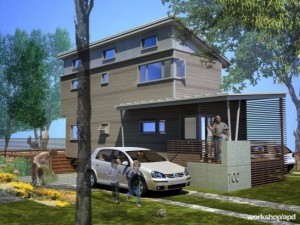
Finally, Matthew Berman and Andrew Kotchen, workshop/apd and Founders of SpruceBox, discussed the challenges of rebuilding residential areas of New Orleans following the disasters of Hurricanes Katrina and Rita. As winners of the 2006 Global Green USA contest, sponsored by actor Brad Pitt, the pair created GreeN.O.la, a prototype community of 12 apartments, six single family homes, a community center and day-care facility built along the Mississippi. “Our goal is to create something sustainable, modular, affordable – and well-designed,” says Kotchen. The long, narrow structures recall the shotgun homes destroyed in the Hurricanes. Designed with an outlook for the future, the prefabricated modular units incorporate rooftop vegetation, solar panels and solar water heaters, rainfall collection, as well as community gardens and composting. According to Berman, “It’s supposed to be a model of sustainability in the Gulf Coast.”
Berman and Kotchen took some of their learnings from developing these prototype kitchens and bathrooms (usually the most expensive features of a home) and launched SpruceBox. The idea behind SpruceBox is to enable any homeowner to be able to affordably and sustainably remodel their kitchen and bath without having to hire an architect or spend hours researching options. You can just go to the site and easily design your kitchen. All the resources are there, all in one spot.
The concept behind Chicago Ideas Week is to create a platform in the Midwest where innovators, leaders, and entrepreneurs could connect and interact with each other and the public to educate and inspire. As an international nexus for architecture, Chicago is particularly suited to hosting this panel, and it was a fitting way to start off the week.