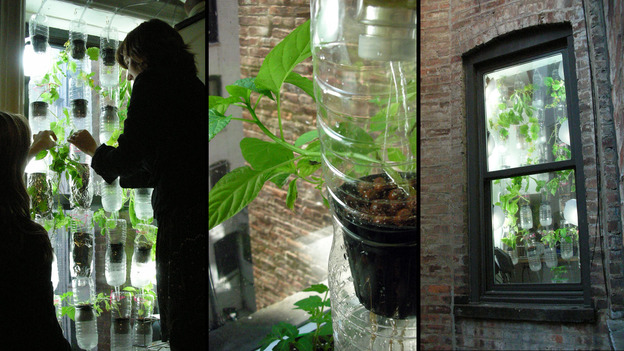
If you have a green thumb, a window and Do-It-Yourself ethic, you too, can be a farmer, even in your downtown apartment building. Summer is here, and for urban dwellers with no access to soil, hydroponic gardening is a way to grow fresh veggies indoors.
The Window Farms project promotes the production of hydroponic food gardens in homes and offices, using recycled or locally-sourced materials. These are high yield systems to help you have a more self sustainable, urban life.
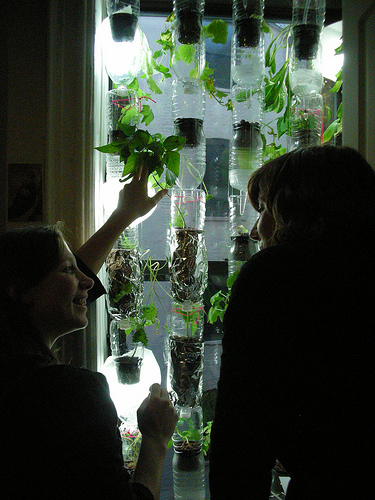
The window farm concept was developed in February 2009 by artists Britta Riley and Rebecca Bray via an artist’s residency program at Eyebeam Art and Technology Center in New York City. They were largely inspired by the impact that growing one’s food can have on the environment. According to their website, windowfarms.org , research has indicated that growing some of one’s own food supply is advantageous “not only because of the food industry’s heavy carbon footprint” (think distances food travels from field to fork, heavy use of water, and application of herbicides, pesticides, and fungicides, many petroleum derived)” but also because participating in agricultural production cultivates a valuable skill set around sustainability issues.”
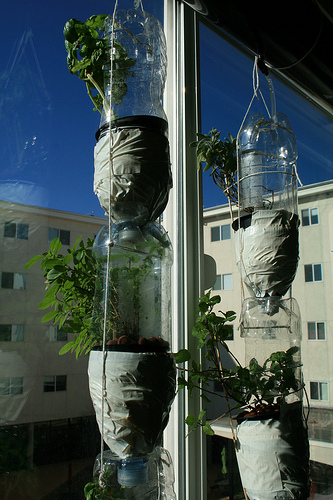
Window farmers use recycled 1.5 liter water bottles, clay pellets, plastic tubing and inexpensive fish tank air pumps to create their indoor gardens.
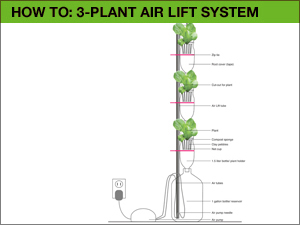
The simplest window farm system is a column of upside-down water bottles connected to one another. Plants grow out of holes cut into the sides. An air pump is used to circulate liquid nutrients that trickle down from the top of the column and make their way to the plant roots.
“It’s just fun to have food growing in your own apartment,” Riley says. “Especially during the winter months you’ve got this lush bunch of green lettuce that’s growing in the window and kind of freshening the air in your apartment and it actually just looks pretty.”
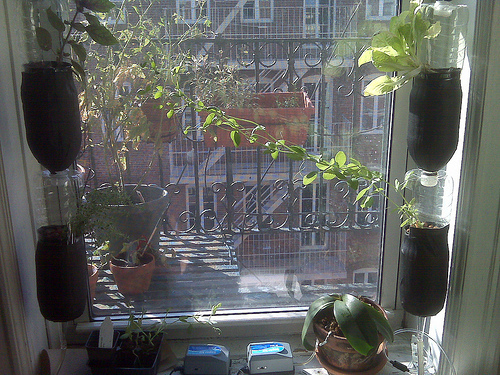
HomeGrown.org blog offers how-to-guides and support to help you build your very own window farm using low-impact or recycled local materials. The blog is also an online community of window farmers, where they share development processes and design innovations.